Perfektion und Unsterblichkeit – Was für Geschichten werden wir uns erzählen, wenn es keine Geschichten mehr gibt? – Wenn Träume die Spiegel unserer Seele sind, was ist dann die Realität?
When a prompt becomes code and a literary text is transformed into a new medial operation
For another experiment with my 1974 play Ganymed, I used ElevenLabs to transform the beginning of Part One into a song. The starting point was not a fully developed musical arrangement, but a comparatively short prompt:
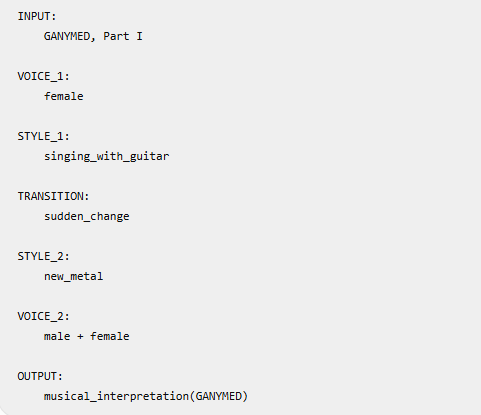
female voice singing with guitar then sudden change to new metal with male voice and female voice
At first glance, this seems like a simple production instruction. Functionally, however, it can be read as a representation of code. It does not describe the content of the song. Instead, it specifies the conditions under which the text is to be transformed.
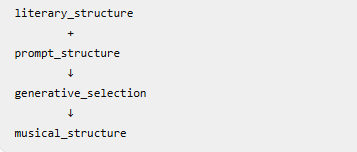
Very schematically:
The prompt already contains a small dramaturgy. It defines an initial state, a rupture, and a second state.
he code does not write the text. Nor does it fully determine how the text is to be understood. Rather, it provides a transformational regime within which a generative AI reorganizes the literary text musically.
That is precisely what makes the experiment interesting.
The Text as Code
Ganymed itself can also be viewed in this way.
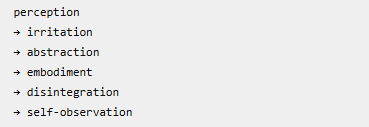
The opening of the play does not merely consist of statements. It initiates a sequence of operations. Ganymed begins with an irritating bodily perception — an “evangelical taste” on his tongue — moves from triviality to metaphysics, and then asks Zett Stern to imagine himself as a pair of glasses. The glasses fall to the ground, shatter, and give rise to questions about feeling, ego, and self-awareness.
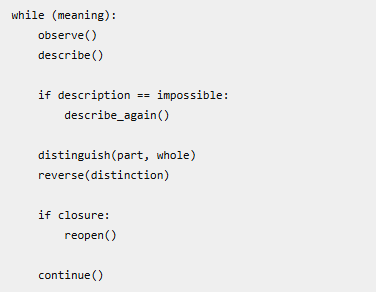
If this sequence is translated not semantically but operationally, it might look something like this:
observe(body_sensation)
if sensation == strange:
articulate()
shift(
triviality,
metaphysics
)
address(other)
if other == "conjugate_complex_number":
destabilize_identity()
imagine(self_as_glasses)
while falling:
perceive(air_resistance)
perceive(gravity)
on_impact:
shatter()
ask:
what_happens_to(feeling)
what_happens_to(ego)
what_happens_to(self_awareness)
This is, of course, not executable programming code. But it makes one quality of the text visible: Ganymed generates meaning not only through statements, but through sequences of operations.
Perceiving.
Asserting.
Irritating.
Shifting.
Imagining.
Shattering.
Questioning.
And observing again.
The text therefore already contains something like a poetic flowchart.
When Prompt and Text Meet
Now two “codes” encounter one another.
The literary code might schematically read:
The prompt-code, by contrast:
The AI has to mediate between these two structures.
The result is therefore not simply a setting of the text to music. The system has to make decisions: Which passages remain quiet? Where does a rupture seem appropriate? Which voice carries which tension? When does intimacy turn into aggression?
A third order emerges from two different ones:
This is what I call algorithmically mediated poetic transformation.
The AI Does Not Translate Words, but Relations
The comparison with my earlier visual experiments with Ganymed is particularly revealing.
In image generation, the AI repeatedly seized on easily visualizable objects: glasses, wine, mathematical signs, figures. It translated the text mainly through its iconic anchors.
Music operates differently.
It does not have to show a pair of glasses.
Instead, it can make the act of shattering audible.
It does not have to depict a complex number.
It can move between different voices, registers, and sonic spaces.
It does not have to represent irritation.
It can produce it.
Machine interpretation therefore shifts from objects to relations and transitions.
IMAGE_AI:
object → representation
MUSIC_AI:
tension → transformation
contrast → dynamics
rupture → genre_change
The abrupt transition I specified — from female voice and guitar to new metal with male and female voices — provides a structure for this. The machine is not told what philosophical meaning the change is supposed to carry. It must relate the formal shift to the existing text on its own.
The prompt therefore determines the form of difference, not its complete meaning.
Is This Code Poetry?
In the traditional sense, only partially.
In classic Code Poetry, programming code itself becomes poetic material. Here, the actual software code remains invisible.
But functionally, something related is happening.
My prompt can be read as code. The literary text can be read as an operational structure. A generative system connects the two and produces a new poetic state.
For that reason, I would describe it as AI-mediated Code Poetry — or, more precisely, as algorithmically mediated poetic transformation.
The code is no longer necessarily the visible poem.
It is the condition of its transformation.
The Work as a Series
This also changes the question of where the work itself is located.
First there is Ganymed as text.
Then Ganymed as machine-spoken performance.
Then the AI-generated visual interpretation.
Then the screenplay.
Then the film.
And now the musical versions.
GANYMED_1974
↓
AI_voice
↓
AI_screenplay
↓
AI_visualization
↓
film
↓
music_prompt
↓
song_version_1
↓
song_version_2
↓
...
None of these versions replaces the source text.
Each one is a new observation of the same material.
The poetic work increasingly consists of the series of its algorithmic translations.
And perhaps this is where the actual Code Poetry of the experiment lies.
Not in the source code.
Not in the prompt alone.
Not in the generated song.
But in the difference between the states.
The Prompt as an Instruction for Observation
The prompt therefore acquires a second function.
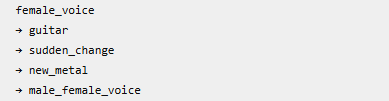
It is not only a production instruction, but an instruction for observation.
With
female voice
→ guitar
→ sudden change
→ new metal
→ male + female voice
I am implicitly asking the machine:
What happens to this text if you observe it under these conditions?
The answer does not take the form of an explanation.
It takes the form of music.
And precisely for that reason, something becomes observable that the original text alone cannot reveal: how a generative system translates its tensions, ruptures, and transitions into another medium.
Perhaps this is the decisive extension of the concept of Code Poetry:
The code no longer has to be the poem itself. It can create a space of possibilities in which poetic transformation becomes observable.
The prompt, then, is not merely a command addressed to a machine.
It becomes part of the work.
Version 1: Shattered Resistance
Version 2: The Shattered Glass
Version 3: The Gravity of Shattering (alternate prompting)
What happens when a literary text is not only read, but translated by AI into images, voices, and scenes?
For an experiment, I had my 1974 play Ganymed spoken in full by AI-generated voices. The text was then transformed by AI into a screenplay and finally into a visual sequence. One thing soon became apparent that may seem trivial at first, but is theoretically quite revealing: the AI almost exclusively selected the most obvious images contained in the text.
Wine became wine glasses. The complex number became a mathematical representation. The glasses became glasses. Clouds became clouds.
At first, this seems perfectly plausible. Ganymed offers enough visually accessible material. At the beginning of Part Two, for example, the figures are placed in a park; food and drinks stand on a table. Ganymed urges Psyche to drink, so that the wine may intoxicate them.
It becomes more interesting, however, when the AI does not merely illustrate, but produces a new meaning through its act of selection.
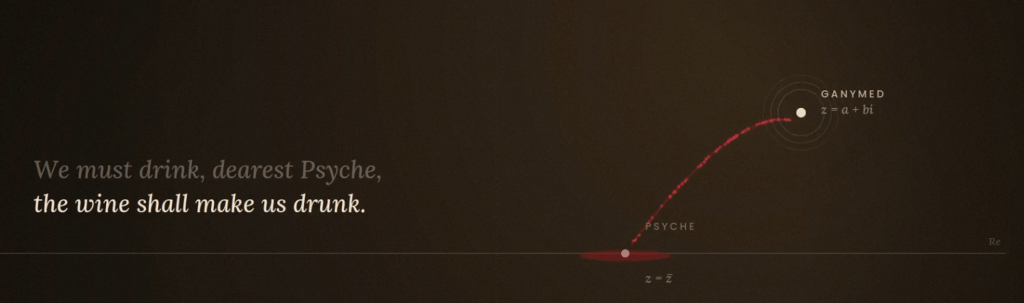
Two visual versions were generated for the opening of Part Two. In the first, Ganymed was placed above Psyche. A red curved line led downward from him toward her. Formally, this was probably intended as a connection, a movement, or perhaps a reference to wine. Yet the image produced an entirely different association: it looked as if Ganymed were urinating down onto Psyche.
Versthe algorithmically mediated movement between different forms of meaning.ion 1 – the algorithmically mediated movement between different forms of meaning.GANYMED Part II
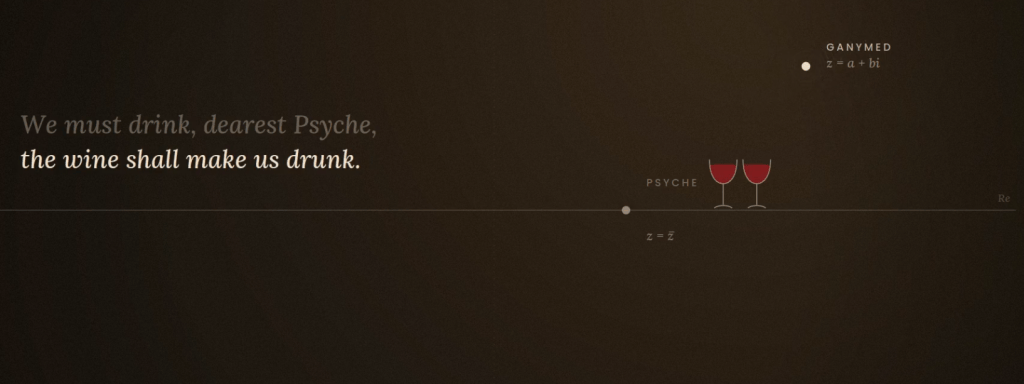
After I pointed this out, the AI generated a second version. The red line disappeared. In its place, two wine glasses appeared between the figures.
What matters here is not the comic misinterpretation itself. What is more interesting is the sequence of observations.
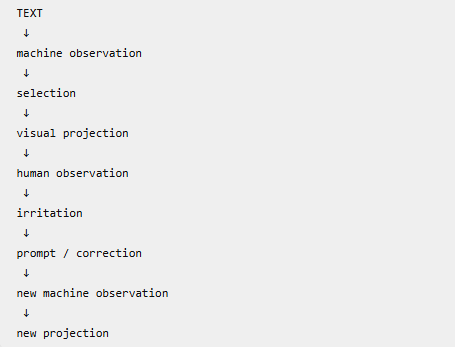
The literary text is observed by the AI. The AI selects elements and generates an image. That image is then observed by a human. The human observation irritates the machine. The machine responds by producing a new visual interpretation.
A recursive chain emerges:
Text → machine observation → selection → image → human observation → correction → new image
This is where, for me, the experiment begins to approach Code Poetry.
Version 2 – a form of generative Code Poetry. GANYMED Part II
In the narrow sense, Code Poetry refers to texts in which programming code itself becomes poetic material. In this experiment, however, the code is not visible. It operates in the background as a transformational apparatus. The poetic quality does not arise from the syntax of a program, but from the algorithmically mediated movement between different forms of meaning.
One might therefore speak of a form of generative Code Poetry.
Easy Code: How does one visualize the impossibility of fully describing an experience?
What is crucial is that the AI seems to prefer visualizing what can easily be translated into objects, figures, or spatial relations. By contrast, the operations that are central to Ganymed resist immediate visualization.
How does one visualize Zwischenzeitlichkeit — an in-between temporality?
How does one visualize the impossibility of fully describing an experience?
In Part One, Ganymed repeatedly demands that Zett Stern describe the experience of shattering like a pair of falling glasses. Zett Stern finally answers: “I cannot.”
The glasses can easily be shown.
The failure of description is far more difficult to show.
The same applies to another central motif of the text: the relation between part and whole. At the end of Part One, the figures formulate the idea that they are simultaneously part and whole. Again, what matters is not the image itself, but the paradoxical operation that resists definitive closure.
This is where the epistemic value of the AI experiment emerges.
The AI does not merely illustrate Ganymed.
Through the AI, Ganymed makes observable how the AI selects meaning.
Code Poetry applied on GANYMED
What becomes visible also reveals what remains invisible.
The wine appears.
Zwischenzeitlichkeit disappears.
The glasses appear.
The failure of self-description remains unseen.
The complex number can be placed on a mathematical plane.
The paradoxical experience of being simultaneously part and whole resists simple visualization.
The role of the literary text therefore changes. It is no longer merely the object of interpretation. It becomes an observational arrangement.
The decisive question is no longer:
What does Ganymed mean?
But rather:
What does Ganymed make visible when a generative AI attempts to understand it?
In this sense, Code Poetry would no longer simply mean poetry written with code.
It would be a poetry emerging in the intermediate space between text, algorithm, and observer.
The work would then no longer reside entirely in the original text, nor in the generated image, nor in the underlying code.
It would reside in the difference between the translations.
And perhaps this is precisely where a new form of epistemic literature begins: where a text does not merely show something, but makes visible how an observer — human or machine — comes to see something at all.
Very schematically: AI-mediated Code Poetry The “code” is not visible here. Nor does it write the text itself. Instead, it functions as a transformational regime between different media.The poetic work therefore no longer consists solely of Ganymed, nor solely of the film produced from it.It consists of the series of its algorithmic translations.
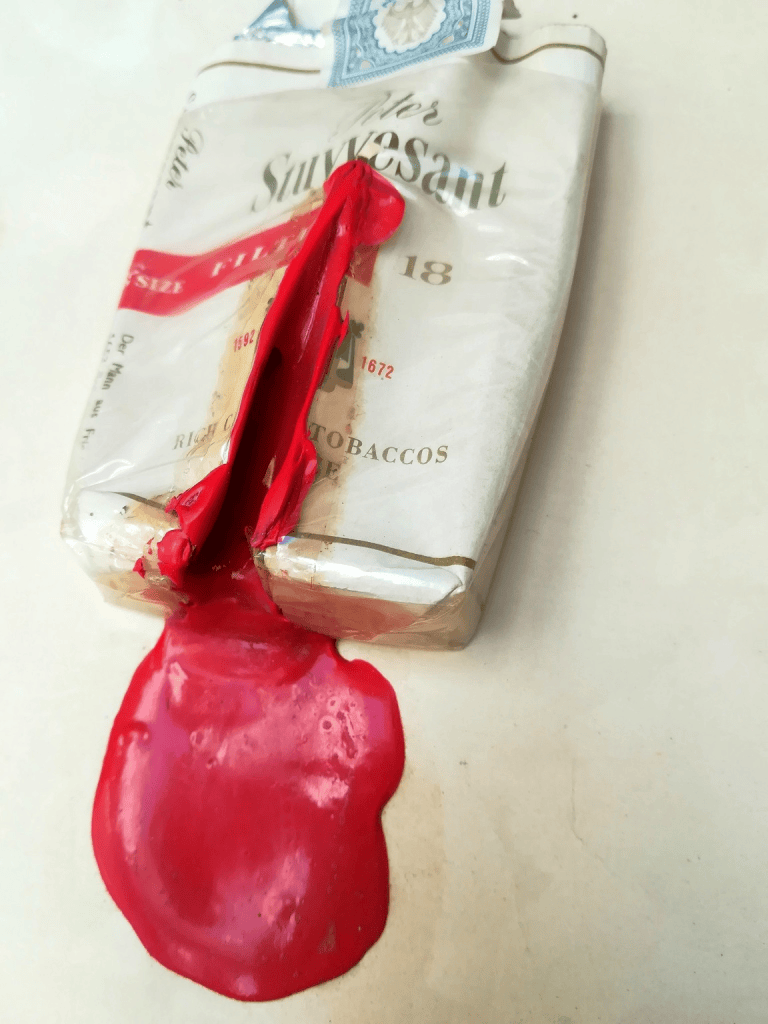
In 1972, my brother and I made a series of objects together. We called ourselves the KH + CH Group. We started with everyday objects and made them spill out: matches, coloured pencils, medicines, and also a pack of Peter Stuyvesant cigarettes. From the opened cigarette pack, a red, bodily-looking form emerges and spreads across the surface beneath it.
It looks like a bleeding pack, its plasma beginning to coagulate into a viscous mass. The pack itself provides further signs: brand name, typography, numbers, white, red. Yet these signs do not add up to an unambiguous story.
The object remains open.
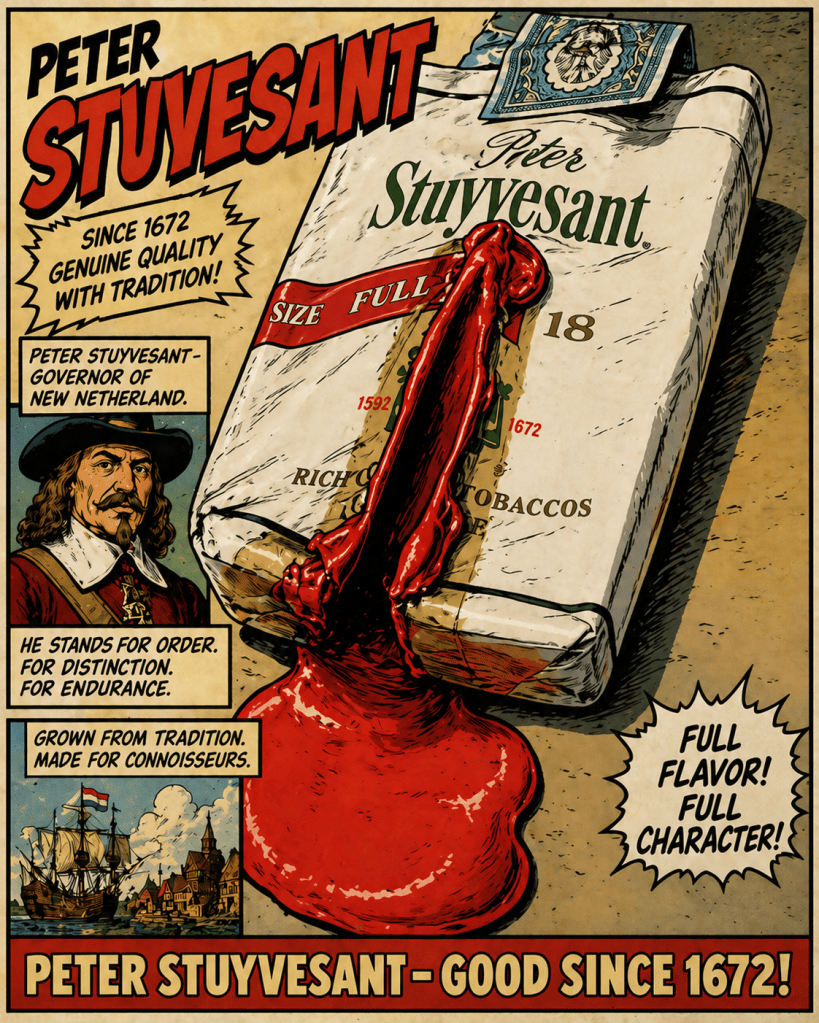
More than fifty years later, I gave a photograph of this work to a generative AI. What emerged was a historical advertisement: Peter Stuyvesant suddenly appears as a figure from a bygone era, sailing ships enter the scene, and tradition, order, and quality are invoked. The red form becomes part of a dramatic advertising aesthetic.
AI-generated transformation of the artwork “Untitled” — KH + CH Group (1972). Starting from the original image, the AI generates a fictitious historical advertisement and transforms the open visual constellation into a plausible narrative of tradition, authority, and quality.
The AI had not simply altered the original image.
It had continued its story.
And it told a story that had never existed.
Why Does Something False Look So Right?
It would be easy to dismiss the result as a typical hallucination of generative AI.
Historical connections are invented, dates are linked, visual motifs are added, and from them a past is constructed that never existed in this form.
But that might mean overlooking precisely what is most interesting.
Because the result does not appear random at all.
It possesses a peculiar plausibility.
The typography looks like historical advertising. The colour scheme fits. Sailing ship, merchant or governor, tradition, tobacco, and promises of quality reinforce one another. Even the invented advertising slogans seem so familiar that one could almost mistake them for authentic historical copy.
The question, therefore, is not only:
Why does AI produce something false?
The more interesting question is:
Why does this falsehood appear so plausible to us?
Plausibility and truth are evidently not the same thing.
An image can be historically false and yet highly compatible with familiar cultural patterns.
Style Is More Than a Surface
This became even clearer in further experiments.
I had images transformed into different aesthetic forms: Romanticism, Expressionism, Japanese ink drawing, photorealism, comics, and other stylistic worlds.
At first, one might assume that the object remains the same and that only its external appearance changes.
But that is precisely what does not happen.
Each style also changes what becomes important in the image.
A Romantic landscape requires different relations between foreground, horizon, light, and nature than an Expressionist representation does. A Japanese ink drawing reduces differently from a comic. Photorealism, in turn, creates different expectations of what should appear relevant or credible.
Style, then, is not merely decoration.
It functions as an order of selection.
AI does not simply translate an already fixed object into different aesthetic languages. Each time, it reconstructs the object under different conditions of visibility.
Some elements are amplified, others weakened, some disappear altogether, and occasionally something emerges that was not present in the source image at all.
The image remains the same — and at the same time becomes another.
When Images Begin to Drift
This process became particularly visible in serial transformations.
When a new AI-generated version was no longer based on the original image but on the immediately preceding transformation, the composition gradually moved further away from its starting point.
At first, the changes were barely noticeable.
A mountain shifted slightly farther into the background. A form became more strongly emphasised. The relationship between foreground and background changed.
But every small change became the new starting condition for the next generation.
What had previously been a deviation became a premise.
And on the basis of that premise, the next deviation could occur.
After several steps, an image had emerged that still bore a recognisable genealogical relationship to the original, yet no longer corresponded to it.
The AI had not simply accumulated errors.
It had recursively stabilised its own previous selections.
Here lies an interesting parallel with social processes. Decisions, descriptions, or interpretations can likewise become premises for later decisions. What was initially contingent may eventually appear self-evident because subsequent operations are already building upon it.
From a Space of Possibility to a Story
The original Stuyvesant object from 1972 possesses a quality that makes it particularly interesting for this experiment.
It keeps its meaning in suspension.
Its individual elements allow for interpretations without finally fixing any one of them.
The generated advertisement behaves differently.
It closes down many of these possibilities.
Peter Stuyvesant becomes a historical figure. The cigarette pack becomes a sign of tradition. The colour scheme acquires an advertising function. Fragments become a story.
AI thus transforms indeterminacy into determinacy.
But that is only one side of the process.
For as soon as I generate several variants — advertisement, Expressionism, photorealism, ink drawing, Surrealism — a new space of possibility opens up at the same time.
This produces a peculiar paradox:
Each individual AI generation closes possibilities, while a series of generations makes new possibilities visible.
Perhaps this is precisely where one of the particular epistemic qualities of generative AI lies.
AI as an Epistemic Environment
We usually judge AI by its results.
Is the answer correct?
Is the text good?
Is the image successful?
Has the machine understood what was meant?
My experiments suggest another possible use.
Generative AI can perhaps also be approached as an epistemic environment.
An epistemic environment does not necessarily provide knowledge. It organises conditions under which the selectivity of knowledge remains observable.
The Stuyvesant experiment, for example, does not show what the AI “knows” about the year 1972.
Rather, it shows which relations it establishes when confronted with certain visual signs.
Peter Stuyvesant.
Tobacco.
The past.
Trade.
Tradition.
Quality.
Authority.
These connections were not present in the original as a ready-made story. Yet the AI turns them into a coherent narrative.
In this way, something becomes visible that otherwise easily remains hidden: meaning arises through selection and connection.
Machines Are Not the Only Ones That Hallucinate Stories
For that very reason, it would be too simple to treat this merely as an AI problem.
Humans do something structurally similar.
We recognise patterns, fill in missing connections, and organise ambiguity into familiar stories. Organisations do this as well. They classify situations, stabilise expectations, and treat distinctions once made as premises for further decisions.
AI merely makes such processes unusually fast and experimentally reproducible.
The same starting point can be transformed again and again.
We can observe what disappears.
We can compare variants.
And we can even follow how small selections, through recursion, become stabilised into apparently self-evident forms.
This shifts the interesting question.
No longer merely:
What does the AI generate?
But:
Which possibilities does it make visible — and which does it close down in the process?
An Image from 1972 in the Year 2026
Perhaps this is why the temporal distance in this small experiment is particularly interesting.
In 1972, an untitled object was created whose meaning was not fixed.
Photograph of the object “Untitled” — KH + CH Group (1972)
In 2026, this object is observed anew by a generative system.
The AI does not discover an original meaning within it. Nor can it reconstruct what my brother and I were thinking at the time.
Instead, it generates new possibilities for connection from the signs available to it.
One of them is the fictitious historical advertisement.
It is false.
It is plausible.
And precisely for that reason, it is epistemically revealing.
For suddenly we can observe how quickly open signs can be transformed into a closed story.
Perhaps, then, the epistemically most interesting use of generative AI does not lie in having it tell us what the world is like.
It may be more interesting to use it to observe how one possible world becomes an apparently self-evident world.
And, occasionally, how that self-evidence can be opened up again.
Was ein Readymade von 1972 über generative KI, Plausibilität und Möglichkeitsräume zeigt
1972 machten mein Bruder und ich gemeinsame Objekte. Wir nannten uns KH + CH Group. Ausgangspunkt waren Gegenstände des Alltags, die wir auslaufen ließen. Streichhölzer, Buntstifte, Medikamente und auch eine Packung Peter Stuyvesant. Aus der geöffneten Packung Zigaretten tritt eine rote, körperlich wirkende Form hervor und breitet sich auf der Unterlage aus.
Es wirkt wie eine blutende Schachtel, das Plasma beginnt dickflüssig zu gerinnen. Die Packung selbst liefert weitere Zeichen: Marke, Typografie, Zahlen, Weiß, Rot. Doch diese Zeichen ergeben keine eindeutige Geschichte.
Das Objekt bleibt offen.
Mehr als fünfzig Jahre später habe ich ein Foto dieser Arbeit einer generativen KI übergeben. Daraus entstand eine historische Werbegrafik: Peter Stuyvesant erscheint plötzlich als Figur aus einer vergangenen Epoche, Segelschiffe tauchen auf, Tradition, Ordnung und Qualität werden beschworen. Die rote Form wird Bestandteil einer dramatischen Werbeästhetik.
KI-generierte Transformation des Kunstobjekts „ohne Titel“ – KH + CH Group (1972). Ausgehend vom Originalbild erzeugt die KI eine fiktive historische Werbegrafik und überführt die offene Bildkonstellation in ein plausibles Narrativ von Tradition, Autorität und Qualität.
Die KI hatte das ursprüngliche Bild nicht einfach verändert.
Sie hatte es weitererzählt.
Und sie erzählte eine Geschichte, die nie existiert hatte.
Warum sieht das Falsche so richtig aus?
Man könnte das Ergebnis schnell als typische Halluzination generativer KI abtun.
Historische Zusammenhänge werden erfunden, Jahreszahlen miteinander verbunden, Bildmotive ergänzt und daraus eine Vergangenheit konstruiert, die so nie existiert hat.
Aber damit wäre vielleicht gerade das Interessanteste übersehen.
Denn das Ergebnis wirkt keineswegs zufällig.
Es besitzt eine eigentümliche Plausibilität.
Die Schrift sieht nach historischer Werbung aus. Die Farbgebung passt dazu. Segelschiff, Kaufmann oder Gouverneur, Tradition, Tabak und Qualitätsversprechen bestätigen einander. Selbst die erfundenen Werbesprüche wirken so vertraut, dass man sie beinahe für historisch halten könnte.
Die Frage lautet deshalb nicht nur:
Warum erzeugt die KI etwas Falsches?
Interessanter ist:
Warum erscheint uns dieses Falsche so plausibel?
Plausibilität und Wahrheit sind offenbar nicht dasselbe.
Ein Bild kann historisch falsch und dennoch kulturell außerordentlich anschlussfähig sein.
Stil ist mehr als eine Oberfläche
Das wurde in weiteren Experimenten noch deutlicher.
Ich ließ Bilder in unterschiedliche ästhetische Formen übertragen: Romantik, Expressionismus, japanische Tuschezeichnung, Fotorealismus, Comic und andere Stilwelten.
Zunächst könnte man meinen, der Gegenstand bleibe gleich und lediglich seine äußere Form werde verändert.
Doch genau das geschieht nicht.
Jeder Stil verändert auch, was im Bild wichtig wird.
Eine romantische Landschaft benötigt andere Beziehungen zwischen Vordergrund, Horizont, Licht und Natur als eine expressionistische Darstellung. Eine japanische Tuschezeichnung reduziert anders als ein Comic. Fotorealismus erzeugt wiederum andere Erwartungen daran, was als relevant oder glaubwürdig erscheint.
Stil ist deshalb nicht bloß Dekoration.
Er wirkt als Selektionsordnung.
Die KI übersetzt einen bereits feststehenden Gegenstand nicht einfach in verschiedene ästhetische Sprachen. Sie rekonstruiert ihn jeweils unter anderen Bedingungen der Sichtbarkeit.
Dabei wird manches verstärkt, anderes abgeschwächt, manches verschwindet vollständig und gelegentlich entsteht etwas, das im Ausgangsbild überhaupt nicht vorhanden war.
Das Bild bleibt dasselbe – und wird zugleich ein anderes.
Wenn Bilder anfangen zu driften
Besonders deutlich wurde dieser Prozess bei seriellen Transformationen.
Wenn eine neue KI-Version nicht mehr vom ursprünglichen Bild, sondern von der jeweils vorhergehenden Transformation ausging, entfernte sich die Komposition zunehmend vom Ausgangspunkt.
Zunächst waren die Veränderungen kaum auffällig.
Ein Berg rückte etwas weiter nach hinten. Eine Form wurde stärker betont. Ein Verhältnis von Vorder- und Hintergrund verschob sich.
Doch jede dieser kleinen Veränderungen wurde in der folgenden Generation zur neuen Ausgangslage.
Was zuvor Abweichung gewesen war, wurde Voraussetzung.
Und auf dieser Voraussetzung konnte die nächste Abweichung entstehen.
Nach mehreren Schritten war ein Bild entstanden, das noch immer eine erkennbare genealogische Beziehung zum Ausgangsbild besaß, ihm aber keineswegs mehr entsprach.
Die KI hatte nicht einfach Fehler akkumuliert.
Sie hatte ihre eigenen vorhergehenden Selektionen rekursiv stabilisiert.
Gerade darin liegt eine interessante Parallele zu sozialen Prozessen: Auch dort können Entscheidungen, Beschreibungen oder Interpretationen zu Voraussetzungen späterer Entscheidungen werden. Was zunächst kontingent war, erscheint irgendwann selbstverständlich, weil nachfolgende Operationen bereits darauf aufbauen.
Vom Möglichkeitsraum zur Geschichte
Das ursprüngliche Stuyvesant-Objekt von 1972 besitzt eine Eigenschaft, die für dieses Experiment besonders interessant ist.
Es hält seine Bedeutung in Schwebe.
Die einzelnen Elemente erlauben Interpretationen, ohne eine von ihnen endgültig festzuschreiben.
Die generierte Werbegrafik verhält sich anders.
Sie schließt viele dieser Möglichkeiten.
Peter Stuyvesant wird zur historischen Figur. Die Zigarettenpackung wird zum Zeichen von Tradition. Die Farbgebung erhält eine werbliche Funktion. Aus Fragmenten wird eine Geschichte.
Die KI transformiert damit Unbestimmtheit in Bestimmtheit.
Aber das ist nur die eine Seite.
Denn sobald ich mehrere Varianten erzeuge – Werbung, Expressionismus, Fotorealismus, Tuschezeichnung, Surrealismus –, öffnet sich zugleich ein neuer Möglichkeitsraum.
Das führt zu einem eigentümlichen Paradox:
Jede einzelne KI-Generation schließt Möglichkeiten, während eine Serie von Generationen neue Möglichkeiten sichtbar macht.
Vielleicht liegt gerade darin eine besondere epistemische Qualität generativer KI.
KI als epistemische Umgebung
Üblicherweise beurteilen wir KI nach ihren Ergebnissen.
Ist die Antwort richtig?
Ist der Text gut?
Ist das Bild gelungen?
Hat die Maschine verstanden, was gemeint war?
Meine Experimente legen eine andere Verwendung nahe.
Generative KI lässt sich vielleicht auch als epistemische Umgebung beobachten.
Eine epistemische Umgebung liefert nicht notwendig Erkenntnis. Sie organisiert Bedingungen, unter denen die Selektivität von Erkenntnis beobachtbar bleibt.
Das Stuyvesant-Experiment zeigt beispielsweise nicht, was die KI über das Jahr 1972 „weiß“.
Es zeigt vielmehr, welche Beziehungen sie herstellt, sobald sie mit bestimmten visuellen Zeichen konfrontiert wird.
Peter Stuyvesant.
Tabak.
Vergangenheit.
Handel.
Tradition.
Qualität.
Autorität.
Diese Verbindungen lagen nicht als fertige Geschichte im Original. Die KI erzeugt aus ihnen jedoch ein konsistentes Narrativ.
So wird etwas sichtbar, das sonst leicht verborgen bleibt: Bedeutung entsteht durch Auswahl und Anschluss.
Nicht nur Maschinen halluzinieren Geschichten
Gerade deshalb wäre es zu einfach, die Sache lediglich als KI-Problem zu behandeln.
Menschen tun etwas strukturell Ähnliches.
Wir erkennen Muster, ergänzen fehlende Zusammenhänge und ordnen Mehrdeutigkeit in bekannte Geschichten ein. Organisationen tun dies ebenfalls. Sie klassifizieren Situationen, stabilisieren Erwartungen und behandeln einmal getroffene Unterscheidungen als Voraussetzungen weiterer Entscheidungen.
Die KI macht solche Prozesse lediglich ungewöhnlich schnell und experimentell reproduzierbar.
Man kann dieselbe Ausgangslage immer wieder verändern.
Man kann beobachten, was verschwindet.
Man kann Varianten miteinander vergleichen.
Und man kann sogar verfolgen, wie sich kleine Selektionen durch Rekursion zu scheinbar selbstverständlichen Formen stabilisieren.
Damit verändert sich die interessante Frage.
Nicht mehr nur:
Was erzeugt die KI?
Sondern:
Welche Möglichkeiten macht sie sichtbar – und welche schließt sie dabei?
Ein Bild von 1972 im Jahr 2026
Vielleicht ist deshalb gerade die zeitliche Distanz dieses kleinen Experiments interessant.
1972 entstand ein Objekt ohne Titel, dessen Bedeutung nicht festgelegt wurde.
Fotographische Abbildung des Objektes „ohne Titel“ – KH + CH Group (1972)
2026 wird dieses Objekt von einem generativen System neu beobachtet.
Die KI findet darin keine ursprüngliche Bedeutung. Sie kann auch nicht rekonstruieren, was mein Bruder und ich damals gedacht haben.
Stattdessen erzeugt sie aus verfügbaren Zeichen neue Anschlussmöglichkeiten.
Eine davon ist die fiktive historische Werbung.
Sie ist falsch.
Sie ist plausibel.
Und gerade deshalb ist sie erkenntnisreich.
Denn plötzlich lässt sich beobachten, wie schnell aus offenen Zeichen eine geschlossene Geschichte werden kann.
Vielleicht besteht der epistemisch interessanteste Gebrauch generativer KI deshalb nicht darin, dass sie uns sagt, wie die Welt ist.
Interessanter könnte sein, mit ihr zu beobachten, wie aus einer möglichen Welt eine scheinbar selbstverständliche Welt wird.
Und gelegentlich auch, wie man diese Selbstverständlichkeit wieder öffnen kann.
„Erinnerungen einer Wasserflasche“ auf dem Weg zum Film.
„Eine Causa Complexa“ lässt sich als epistemische Umgebung betreten: als ein Raum, in dem Wahrnehmungen, Erinnerungen, Sprachspiele und Bilder vorläufige Zusammenhänge bilden. Beim Lesen versuchen wir, uns zu orientieren. Doch ein Wort, eine Korrektur oder eine beiläufige Bemerkung kann die Situation bereits verändern.
Schöpfen, Schöpfung, Erschöpfung. Ein Wasserhahn, ein Warteraum, Gedanken, die abschweifen. Mein Text „Eine Causa Complexa – Erinnerungen einer Wasserflasche“ soll zum Film werden. Hier zeige ich die ersten Probeszenen.
Mit der Verfilmung möchte ich untersuchen, wie sich dieser Vorgang in Bildern und Stimmen fortsetzt. Die ersten Probeszenen zeigen eine mit Claude erarbeitete Lesart. Sie geben dem Text sichtbare Orte und Gegenstände – und werfen damit die Frage auf, was jede solche Festlegung eröffnet und was sie unsichtbar macht.
Die Sequenz ist eine erste Referenz für die weitere Arbeit: Wie verändern Bilder und eine Stimme den Text? Was wird sichtbar, was bleibt offen, welche Verbindungen entstehen?
Für diesen Versuch hat Claude das Drehbuch erstellt und das Bildmaterial recherchiert. Ich habe bislang nur wenig eingegriffen – etwa an einer Stelle ein Waschbecken durch ein Pissoir ersetzt. Die Sprecherstimme ist eine KI-Stimme; die Bilder stammen aus freiem beziehungsweise lizenziertem Material.
Im nächsten Schritt möchte ich eigenes Bildmaterial verwenden und die weiteren Teile des Textes filmisch umsetzen. Die hier gezeigte Fassung hält den Anfang dieses Prozesses fest.
Mich interessiert, welchen Eindruck die Sequenz bei euch hinterlässt. Welches Bild, welcher Satz bleibt hängen?
What happens when a character written in 1974 is heard as an automated voice in 2026?
A few days after the Luhmann Conference in Dubrovnik, Moira McMillan wrote to me about Ganymed, a play I had written more than fifty years ago.
She had read the English version and was already imagining a possible staging:
“When I read the play, to me, Zett sounded like an automated voice (no body). Maybe Siri-ish. Psyche figured as shadow, projected towards the background, with a human female voice. Ganymed, by default, could be a male (human). Not necessarily though.”
What interested me was not simply that her imagined production differed from the original one.
It was that her idea of Zett Stern made immediate sense to me.
And yet Siri did not exist when Ganymed was written.
The body Zett Stern once had
The original production was much more physical.
Ganymed wore something like a toga and was clearly recognisable as a Greek male figure. Zett Stern wore an ordinary suit and a hat. Psyche was clearly female, dressed in a flowing garment.
The stage itself was almost empty: crumpled newspaper, a hanging piece suggesting an abstract black-and-white landscape, and actors isolated by spotlights.
Sound was important. Part One began with music by Brainticket and included abrupt, rhythmic squeaking sounds — something like a bow, or Styrofoam on glass. Part Two opened with Beethoven’s Sixth Symphony, the Pastoral. There was a kind of couch, glasses and a bottle. Part Three began either with Orff’s O Fortuna or Eis aiona! from Catulli Carmina — after fifty years I honestly no longer remember which — and by then only the couch remained.
So Zett Stern had a body.
He even had a hat.
And this is precisely what makes Moira’s idea of Zett Stern as a disembodied voice so interesting to me. This version is not closer to the “real” Zett Stern. Something else happens: one of the conditions under which we identify Zett Stern as a person disappears. There is still a name. There is still a voice. There is still a figure we call Zett Stern. There is still communication that can be attributed to him. But there is no longer a visible body to which these communications can easily be assigned.
Zett Stern does not become imaginary because his body disappears. Zett Stern does not simply become imaginary because his body disappears. The distinction between the real and the imaginary was already at work in the play. What changes is the way in which this distinction can be observed.
One person?
I never really thought of Ganymed, Zett Stern and Psyche as three psychological individuals. But neither can they simply be reduced to three aspects of a single personality.
The play itself resists such a stable assignment.
Zett Stern initially appears close to normality — to the average, the ordinary, the wish to be one among many, one like many. In Part One he says: “Perhaps I am insane … Or perhaps I am simply normal.” A little later, however, even this position begins to shift.
By the end of Part One, Zett Stern has moved remarkably close to Ganymed’s position. He speaks of being not only himself but also a part of himself and, at the same time, the whole. Ganymed immediately takes up the formulation, changing the I into a we.
This movement becomes even more striking in Part Three. Zett Stern takes over words and positions that belonged to Ganymed. Speech migrates between the figures.
And this changes the question.
But perhaps interpreting these shifts is not the most interesting thing we can do with them.
Perhaps the problem is not whether Ganymed, Zett Stern and Psyche are “really” three persons or one. Perhaps the more interesting question is what allows us to attribute a voice, a thought or a position to one of them in the first place.
Their bodies tell us that they are separate. The original staging reinforced this distinction: Ganymed in his toga, Zett Stern in his suit and hat, Psyche in her flowing garment, each isolated by light.
But the language does something else.
Positions move. Words migrate. The distinction between I, you and we becomes unstable.
This is what makes Moira’s idea of Zett Stern as a disembodied voice interesting to me. It does not reveal the “true” Zett Stern. Nor does it make him more abstract. It removes one of the devices by which the original production kept the figures apart: the visible body.
And once that body disappears, a question already present in the play becomes harder to avoid:
Whose voice are we actually hearing?
Psyche between times
Moira imagined Psyche as a shadow projected towards the background, accompanied by a human female voice.
Again, the image seemed strangely familiar despite never having been part of the original staging.
Reading the play today, I wonder whether Psyche might be something like a voice of what I called Zwischenzeitlichkeit — an existence not simply in time, but between temporal positions.
I hesitate to say that Psyche is Zwischenzeitlichkeit. That would turn an observation into a definition, and perhaps close precisely what the figure keeps open.
But the possibility is there.
Ganymed, by contrast, remains the most physical of the three. In the original production he was male almost by default. Today I see no reason why that should have to be prescribed.
The observer has changed
This is where the anecdote becomes more interesting to me than the reconstruction of an old theatre production.
If a character written in 1974 can be recognised in 2026 as something resembling an artificial voice, what exactly has changed?
Not Zett Stern.
Not the words on the page.
The observer has changed — and with the observer, the space of possible distinctions through which the character becomes visible.
In 1974, a bodiless conversational voice available at any moment was hardly part of ordinary experience. Today it is.
“Siri-ish” therefore does not merely describe Zett Stern.
It also describes 2026 observing 1974.
And this is precisely why I have returned to Ganymed after fifty years.
The question that interests me is no longer:
What does Ganymed mean?
It is:
What does Ganymed make observable?
Perhaps Moira’s reading of Zett Stern provides a small answer.
The play has remained almost where I left it.
We have not.
A stage fifty years later
Moira went one step further. If the Luhmann Conference returns to Dubrovnik in 2027, she suggested that Ganymed might actually be staged there — perhaps in the patio of the Inter-University Centre.
Her imagined production would be radically reduced: a physical Ganymed, perhaps; Zett Stern as a bodiless voice; Psyche as shadow or projection; light and sound defining presences that no longer necessarily require bodies.
I find the thought appealing precisely because I would not want to reconstruct the production of the 1970s. But perhaps interpreting these shifts is not the most interesting thing we can do with them.
A reconstruction would try to recover what Ganymed was.
A new staging could ask: What does Ganymed make observable?
In 2026, I presented Ganymed in Dubrovnik as an epistemic environment for observing meaning.
Perhaps in 2027 there would be no need to explain what it does.
Christopherus Steindor Written 1974–1976 Slightly corrected stage version, 2026 English version, 2026
Editor’s Note Ganymed was written between 1974 and 1976 and is published here in a slightly corrected English stage version. The text has retained its fragmentary structure, linguistic discontinuities, repetitions, and abrupt shifts of register. These have not been normalized in translation.
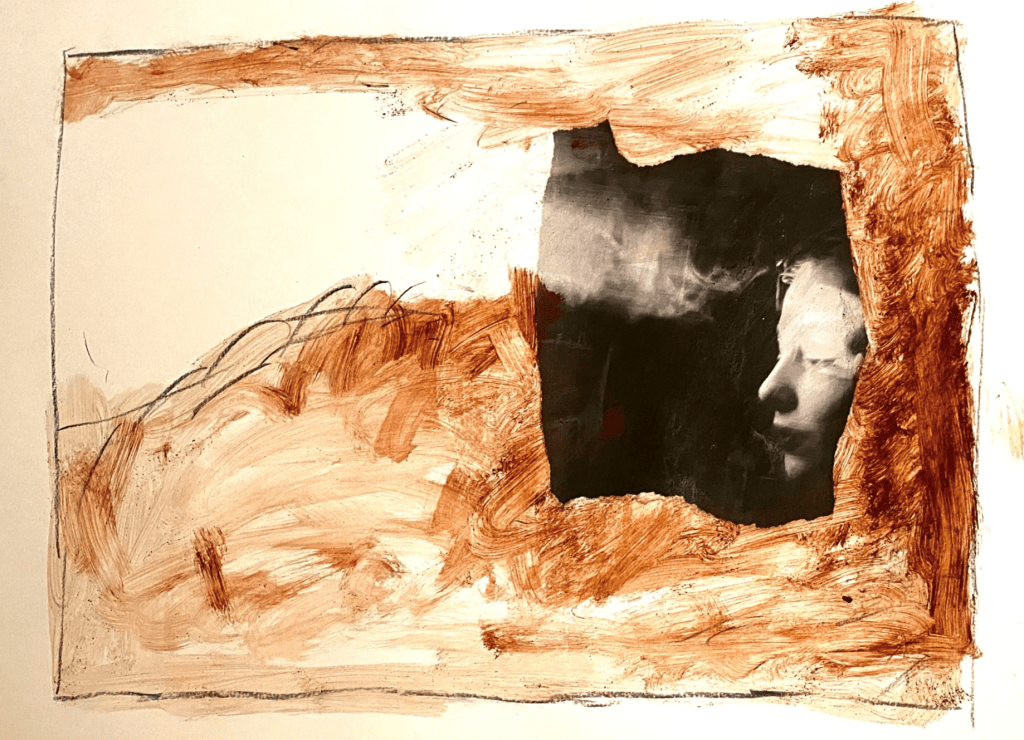
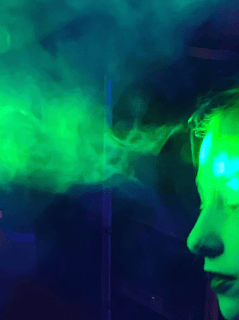
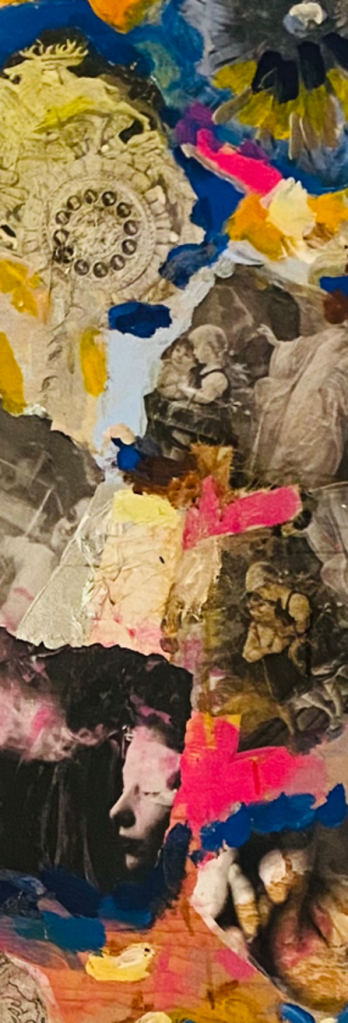
The artworks accompanying this edition are works by the author. They are not illustrations of individual scenes, but visual counterparts to the play.
Artwork by Christopherus Steindor
PART ONE
People
ZETT STERN, a conjugated complex number
GANYMEDE, who rules as the cupbearer of the gods
PSYCHE, the lover of Cupid
(Indeterminate space. Conversation between Ganymed and Zett Stern.)
GANYMED I’ve got such-a-fucking evangelical taste on my tongue.
ZETT STERN Please …
GANYMED That’s none of your fucking shit.
ZETT STERN But I beg you!
GANYMED At first, one thinks that triviality is a byproduct of productivity, but then it turns out that we are, nolens volens, rooted in metaphysics.
ZETT STERN I am a conjugate complex number …
GANYMED Let me explain it to you differently; imagine you were a pair of glasses.
Glasses for seeing.
You—the glasses—fall to the ground. That is, you slowly slip from your two ears and your nose, feeling both the resistance of the air and the pull of gravity.
When you hit the ground, your lenses shatter.
What do you suppose you would feel? What would your ego look like afterward? And what about your self-awareness?
(Pause)
Consider what dimensions might possibly arise from such a perspective!
(Pause. Ganymed looks at Zett Stern.)
Oh! I believe I have detected a trace of astonishment on your face.
ZETT STERN You’ve got to be fucking with me.
GANYMED Fucking with you, fucking with you!!!
ZETT STERN Forgive me, but I am only a complex—no, a conjugate complex— number. I do not, in the slightest, feel discriminated against because of this, but my consciousness, my consciousness … !
GANYMED Oh papperlapapp.
You must not confuse one-dimensionality with multidimensionality, nor multidimensionality with one-dimensionality.
Otherwise, you’re making a mistake. A serious mistake. A fundamental error of thought!
The dimensionality of the inner— the introverted, the inward-turned— and of the outer, the extroverted, the outward-directed— those dimensions, precisely those, you’ve completely ignored.
You’re a eunuch, a gentleman without a tie, a tree without branches!!!
ZETT STERN
… only a conjugate complex number …
GANYMED I understand you. I believe that I understand you. Yes, I understand you.
ZETT STERN
Consider my existence. And then that daisy, growing there in the meadow.
Dream while you do it— and close your eyes.
Immerse yourself in this world … in this world …
GANYMED
There is a connection, a coherence— the glasses … and the daisy. The introversion and the extroversion.
Yes, the problem of Zwischenzeitlichkeit.
I have been thinking about it for a long time.
It is the problem of Zwischenzeitlichkeit.
ZETT STERN
But I do not understand you.
GANYMED Shut up, damn it!!
Don’t you dare interrupt my train of thought again!!
You— you bastard.
ZETT STERN
But …
GANYMED
Please!!!
Where was I— was I …
ZETT STERN
Please?
GANYMED
The thought.
ZETT STERN
Thought?
GANYMED
The thought of You …
ZETT STERN
Of me?
GANYMED
No — of “You.”
ZETT STERN
So it is me after all.
GANYMED
No, damn it, “You.”
ZETT STERN
Ah— I see, “You.”
GANYMED
The thought of you.
ZETT STERN
What does she look like?
GANYMED
The Zwischenzeitlichkeit?
ZETT STERN
No, not what „she“ looks like!!!
GANYMED
I don’t understand you.
ZETT STERN
I mean, I mean … what do I mean Actually?
…I’ve forgotten what I wanted to say.
GANYMED
Please!!
ZETT STERN
I am only a conjugate complex number.
(Zett Stern throws himself to the ground.)
Kick me! Beat me! I deserve it.
GANYMED Get up—please, if anyone sees us!
(Zett Stern gets up.)
GANYMED Don’t you ever do that again in my presence!
It’s disgusting!
You’re behaving like a pig!
ZETT STERN I imagined myself to be a pair of glasses, slowly slipping from both ears and nose, feeling the resistance of the air and the pull of gravity,
and how I shattered.
… I know this feeling.
Yes, I know this feeling.
GANYMED
Describe it!
ZETT STERN
I can not.
GANYMED
Describe it!
ZETT STERN
I can’t do!
GANYMED
Describe it!! Describe it!!
(Ganymede steps after Zett Stern)
Describe it!!!!
(Zett Stern drops to the ground. He holds his hands protectively over his head. No whining or whining.)
Describe it!!
Describe it!!
Describe it!!!
(Ganymede roars)
Damn it, you’re supposed to fuckin’ describe it!!
ZETT STERN
I — can — not!!
GANYMED
(Ganymed is calm and composed again.)
Bastard … You… Pig.
ZETT STERN
May I get up again?
GANYMED
No.
(Ganymed thinking)
Yes.
Get up.
You disgust me.
But— I forgive you.
Get up.
(Zett Stern gets up.)
ZETT STERN
Forgive me, please, that you had to hit me.
(Ganymed waves it off.)
If I only knew how to explain it. If I had the words to speak, and if there were ears that could understand me, that could hear me.
I want to be free. Free like a bird. No— like a cloud …
GANYMED
… blown by the wind.
No—
I want to be the wind.
Gravity.
Magnetism.
I want out of our temporality, out of this temporality.
I want into the dimension of the introverted. I want to be the inner-outer. The outward-turned inner.
I WANT TO WILL!!!
ZETT STERN
We are all figures, numbers,
and I am a conjugate complex number. What does it matter?
GANYMED
You are insane.
ZETT STERN
You are oppressing me.
Yes, you are oppressing me.
You have oppressed me from the very beginning.
You only want to exploit your power.
GANYMED
You accuse me?
ZETT STERN
I condemn you!
GANYMED
Do I deserve this?
I ask you, do I deserve this?
You want to make me a figure, a mere number, and condemn me.
What did I do to deserve this?
ZETT STERN I am tired of being oppressed.
I am a conjugate complex number, and I am proud to be so.
I am proud to be what I am, and I want to remain so.
I want to be a figure, a number.
I want to be a blade of grass, a blade of grass among many, a blade of grass like so many …
I want to be nothing …
… for I am nothing.
All my life I have achieved nothing, and I will never achieve anything.
And I am proud of that.
Perhaps I am insane …
(softer)
Or perhaps I am simply normal.
GANYMED I judged you correctly from the very beginning.
But I will tell you a small episode nonetheless.
I was once a small Wachtelhund, and an orphan as well.
A cyclist struck me unconscious with his walking stick because I had barked at him.
ZETT STERN I’m sorry about that.
GANYMED You don’t have to be sorry.
I don’t need your pity.
I don’t need anyone’s pity.
Because I am strong.
ZETT STERN You are neither inside nor outside. You are somewhere in between.
And if you’re not careful, there will soon be nothing left of you … and … and you will become like me.
You will be a conjugate complex number.
Like me—nothing.
Please don’t do this to yourself. Don’t do it to me. Don’t do it to humanity.
(Pause)
I am disappointed.
Most of all in myself and in you.
Perhaps more in you than in myself.
Or perhaps more in myself.
Yes, I have disappointed myself.
I had hoped to be insane,
and now I must realize that I am completely normal.
GANYMED I did not hit you to show you how normal I am.
No— I wanted to humiliate you. I wanted to hear you scream.
I wanted to expand my field of perception. I wanted to expand my field of experience.
One must degrade oneself in order to be low.
You must not misunderstand me.
Not for the sake of purpose, but for the sake of Zwischenzeitlichkeit I think of “You.”
I do not mean you, the conjugate complex number, but “You,”
and I will not reveal my secret.
Do you understand? You must understand me, otherwise everything was in vain.
ZETT STERN Yes, yes—
I understand you.
I most certainly understand you.
At least, I think I understand you.
GANYMED So my problem lies in the Zwischenzeitlichkeit.
No matter how much I tell you about it, I do not understand it myself.
Perhaps you can help me when I can no longer help myself— if I can be helped at all in the end.
ZETT STERN You cannot be helped.
GANYMED
(absently)
I cannot be helped?
ZETT STERN I cannot be helped either.
And why— I ask you, why should things turn out any better for you than for me?
GANYMED You can’t just …
ZETT STERN Whether I can or cannot is not the point here. Perhaps the question is whether you can still be helped.
And I say: None of us can be helped anymore.
We are all hopelessly stupid. Do you understand me?
GANYMED But I don’t want to be stupid.
ZETT STERN You’re behaving like a little child.
GANYMED
Who gives you the right to say that?
ZETT STERN Whether anyone gives me the right or not is completely irrelevant.
In the end, only the thought counts.
The only thing that is ideal is the ideal itself!!!
GANYMED I haven’t even thought about that.
ZETT STERN No wonder— you’re stupid in a completely different way than I am.
GANYMED But you’re either stupid or you’re not!
ZETT STERN Not at all— you’re mistaken.
You are stupid in a different way than I am, and I am stupid in a different way than you are.
If I were just as stupid as you— that is, stupid in exactly the same way as you— then I would be you, and you would be me, that is, we would be identical.
But since we are not one person, but two, or three, we are not identical— we are differently stupid.
GANYMED And how does that relate to the Zwischenzeitlichkeit?
ZETT STERN Please, leave me alone with your problems— I have enough to deal with my own. You know, I am a conjugate complex number.
GANYMED I must say, I underestimated you. I damn well underestimated you. And I overestimated myself. I damn well overestimated myself.
But then, I’ve never really known how to estimate anything.
I have always concerned myself only with myself and my Zwischenzeitlichkeit, a Zwischenzeitlichkeit that is perhaps more unclear to me than it is clear to you.
In the end, everything is just as it was at the beginning.
And I feel like the glasses again, or like that little Wachtelhund – this poor guy whose eyes were bulging.
If only I could understand myself. Perhaps I would understand “You”. Perhaps then I would understand myself as well.
ZETT STERN No, it’s hopeless. Every attempt would fail.
I want to tell you the story of the man who worshipped that chainsaw— at least, it looked as though he were worshipping it.
He was kneeling on the ground, holding it with both hands, and sawing through a tree trunk just lying there.
GANYMED So these are the limits.
These are the limits we cannot cross—
between us, —and ourselves,
because we do not know ourselves.
ZETT STERN I think we do not even want to know ourselves, because we do not know that we do not understand ourselves, that we ourselves, do not even understand ourselves.
GANYMED What we are left with – are the memories.
ZETT STERN Memories of masses of snow flying straight into our faces, or of oranges that taste sweet.
GANYMED
Or memories of better times, of thoughts— thoughts one has.
These are then the thoughts that become memories, memories that are in fact thoughts.
For when the moment comes, we stop thinking, and only remember, and time becomes Zwischenzeitlichkeit again or something else,
and we completely stop understanding ourselves, we completely stop trying to understand ourselves.
ZETT STERN What we need is— well, what we need is Halt …
at least I think it is Halt, or something like it.
Perhaps understanding, affection, which we deny each other, or something else.
GANYMED Then our old life comes to an end, and it ceases to be simply life,
we stop living the day— we begin to live the day.
ZETT STERN Do you know this feeling, when you live your thoughts, live them as if they were reality?
As if they were more ideal than the ideal?
These are then these—my thoughts.
And no one can take them away from me.
No one can take them away from me!!!
No one can take them away from me!!!
GANYMED And I know that I understand you!
ZETT STERN I am not only myself, but also a part of myself, and not only a part of myself, but at the same time the whole.
All at once I am more than mere mass, all at once I am myself part, I am myself part, I am myself part and yet whole!
GANYMED
And then— we ourselves are part, are ourselves part, and yet whole.
– Curtain –
Artwork by Christopherus Steindor
PART TWO
Characters: ZETT STERN GANYMED PSYCHE, beloved of Amor
In a park. It is afternoon, almost evening. Birdsong.
A bench, two chairs, a table. On the table: food and drink.
Psyche lies on the bench. Ganymed stands beside the table, serving her.
GANYMED We must drink, dearest Psyche, the wine shall make us drunk.
PSYCHE Pour forth, O my Ganymed,
for to receive the draught from thee is sweeter far than drinking of the finest wine.
GANYMED (smiling, pours, sits beside her)
Let us raise our cups and drain them at a breath, that we may make room to fill it yet again with this same draught,
this wondrous liquor that floweth from the vessel.
PSYCHE Ay, let us drink and quench our thirst.
GANYMED It is not thirst— I would destroy my brain, drown all my thoughts, drown all those thoughts that bind me fast.
Let me slay the ancient grief I bear within—
let me weep.
PSYCHE Let thy tears flow, let thy sorrow be, and let us hearken to the murmuring sounds in trees and hedges that the evening softly sings.
(They listen to the birdsong. Zett Stern enters; he espies Ganymed and goes toward him to greet him.)
ZETT STERN Ganymed! Damn it, that I should meet thee here!
GANYMED I think we have not seen each other for a long while.
ZETT STERN
(turning now also to Psyche)
… and Psyche as well.
PSYCHE Drink with us, brother dear!
We would drown our thoughts, destroy the brain!
ZETT STERN Our mind is the only good that we truly possess.
We cannot kill our thoughts— we may numb them for a while, but we cannot kill them.
We would have to kill ourselves, and not even then are we certain whether our thoughts might yet persist, and whether we have only destroyed our mortal shell.
GANYMED Then let us drink ourselves to ruin, that we may numb our senses, that we may not behold what we truly are.
PSYCHE What we think and what we are—
must we not look into the mirror ere we bring our souls to market?
I ask you:
what are we, and where is our worth measured?
I ask you:
for what are we here, and why do we exist?
I ask you—what are we? …and where is our worth measured?
I ask you, what will you do when you come to see that you have given away your soul?
GANYMED Thou art right. We must cast off our past once and for all.
I must forget what I was.
ZETT STERN We must forget that we ever were.
PSYCHE We must not play at fate.
We must not will to govern fate.
ZETT STERN
I think we must not guide what we must not guide, what we cannot guide.
GANYMED Pour, my friends—
let us be drunk with wine.
– Curtain –
PART THREE
(A bench, a chair)
ZETT STERN: I’ve got such a fucking evangelical taste on my tongue.
PSYCHE: Please?
GANYMED: We are conjugate complex numbers.
ZETT STERN: Oh, I believe I have detected a hint of astonishment on your faces.
How we must feel, what we think of ourselves, and who we are.
We must not confuse who we are with what we are.
We must not sit in judgment over those we do not know.
Triviality is merely a byproduct of productivity.
What we are rooted in, we do not know.
We are gradually beginning to observe our existence, and in doing so we neglect the decisive dimensions.
We speak of daisies and mean the glasses on our nose.
We speak of connections we do not understand.
We speak of trains of thought that are derailments of thought,
or simply statements about ourselves—
what we are and what we represent, and how we act, how we ought to act..
GANYMED: We imagine ourselves to be a pair of glasses, slowly slipping from our ears and our nose, feeling the resistance of the air and the pull of gravity— and how we shatter.
(Ganymed lies down on the bench.)
I know this feeling, when I dissolve into my components and no longer know who or what I am.
I know this feeling, of infinite heaviness, when I feel my bones turn to stone, when I think I am a block of concrete.
I leap down from rocks and drive in cars that no longer want to stop, I drive in cars that take on a will of their own, that take possession of me, and someone has fixed the gas pedal, and I drive faster and faster and the road stretches on without end and I merge with it, and merge with the road I am driving.
PSYCHE: I want to be free, free from myself. I want to fly with myself. Fly away, from myself. Remain with myself.
I want to give you my thoughts..
GANYMED: (rises, to Psyche)
Your thoughts?
PSYCHE: My thoughts are my dreams, and my dreams drift away like clouds.
They weave through my mind, weave through my body, make my hands tremble.
Let me speak— so I will be silent.
My words are not words. My words are dreams, are thoughts in my subconscious.
I am the product of these dreams.
I have thought myself, and yet I am myself, and yet I am entirely myself.
What I will do— damn it, I do not know. Action is not my domain. Thoughts direct me, direct you— thus we are three prisoners.
Our prison is our mind.
We presume to be able to solve the problems of humanity, and do not even understand ourselves.
What we should do—who knows? What will happen—who knows? What we should know—who knows?
And one day, the day will come that we fear. We freeze before the mighty voice that calls us to turn back.
But we have forgotten our origin, have forgotten who we are and what we are.
We want out of Zeitlichkeiten we do not understand.
Episodes from our lives, rambling, without connection.
Desperately you try to find meaning in what you do and say. And what you do, you say, and what you think, you speak.
But I want to be free— free of why, I want to live.
GANYMED: We don’t need your pity. Our days. Our nights. Our thoughts. No, I don’t need your pity.
I am a number, a number like you (points to Psyche) and you (points to Zett Stern).
ZETT STERN: What nonsense! I am who I am, and I know what I am. I don’t give a shit about my field of perception. I won’t let myself be turned into your fuckin’ popanz!
Go on—laugh at yourselves! Decide who is stupid and who is not! Go on like this!
I know what I am and I want what I want!!
PSYCHE: Let us go.
GANYMED: No, Psyche, there is still too much unsaid that must be spoken, too much that does not make sense.
Artwork by Christopherus Steindor
PSYCHE: Not for rhyming we came together, not to straighten.
Our paths have brought us together. They will lead us apart again.
I stood in the room. Before me, nothing. Behind me, only the shadow cast by a lamp.
In the mirror, we stand before ourselves.
I ask you: Do we not float between the chaos of dream and reality?
ZETT STERN: (to Ganymed, he points to the bench, sits down on the chair beside it during the conversation)
Please lie down here on this bench,
relax, and begin to speak.
GANYMED: She had jet-black hair, and from her green eyes her temperament sparkled.
Her walk was smooth, like that of a cat. Yes, she resembled a cat, and I firmly believe that she was a cat, or is.
ZETT STERN: Enough words. Back to the parable.
Many years ago, I was a rich man. I owned thousands of fields. The draw well in the middle of the courtyard of my house always yielded fresh water.
But one day, cornflowers and thorny plants hindered the young growth of my fields, and a prophet came along the road and asked me—
GANYMED: No— please, shut the hell up!
ZETT STERN: (offended)
I am silent.
I am silent, because it is better now if I remain silent.
PSYCHE
The analysis of being is the fragment of thoughts not carried through to the end.
GANYMED
All at once we are more than mere mass, all at once we ourselves are part, and yet whole!
ALLE
(turning to the audience)
And all at once we ourselves are part – and yet whole!
— Curtain —
FIN
Notes on Terms and References
Conjugate complex number A mathematical term. If a complex number is written as z = a + bi, its complex conjugate is z̄ = a − bi: the real part remains unchanged, while the sign of the imaginary part is reversed. The expression recurs throughout Ganymed and is deliberately transferred from its mathematical context into the dialogue.
Zwischenzeitlichkeit A German neologism combining zwischen (“between”) and Zeitlichkeit (“temporality”). It may approximately be rendered as “in-between temporality” or “being between times.” The play leaves the term deliberately undefined.
Temporality / Zeitlichkeiten Zeitlichkeit is the German term for “temporality,” the condition of existence or experience as structured by time. The plural Zeitlichkeiten literally means “temporalities.” Where the German word is retained in the English text, its foreignness is intentional.
Papperlapapp An old-fashioned German exclamation used to dismiss something as nonsense or irrelevant, roughly comparable to “pish-posh,” “nonsense,” or “rubbish.” Its slightly comic and antiquated tone is part of the expression.
Wachtelhund Literally “quail dog.” The Deutscher Wachtelhund (German Spaniel) is a German hunting-dog breed traditionally used for flushing and retrieving game. In the play, the word is meant literally, despite the unexpected context in which it occurs.
Halt The German noun Halt means support, stability, or something that gives a person inner or external security—something to hold on to. It should not be confused with the English word “halt,” meaning “stop.”
Popanz A German word originally referring to a frightening dummy, bogeyman, or scarecrow. Figuratively, it can describe an artificially inflated figure of authority or menace, something made important or intimidating by those who construct or invoke it.
Nolens volens Latin, literally “unwilling, willing”: whether one wants to or not; inevitably or willy-nilly.
Ganymed and Psyche Ganymede (Ganymed in German) is a figure from Greek mythology, a beautiful Trojan youth carried away by Zeus and made cupbearer to the gods.
Psyche is the beloved of Eros (Amor/Cupid); her name, Greek psychē, also means “soul” or “breath of life.” The character’s name in Ganymed was directly inspired by Heinrich Heine’s poem Amor und Psyche. Heine’s poem thus forms part of the literary background of the play, alongside the underlying mythological tradition.
About the Work Ganymed was written by Christopherus Steindor in 1974–1976. This English version is based on the slightly corrected 2026 stage version. The accompanying artworks are by the author.
Was es heißt, aus einer festgefahrenen Deutung wirklich herauszukommen — und warum das nicht bedeutet, einfach eine andere zu haben
Es gibt eine bestimmte Art von Erschöpfung, die viele Streitgespräche hinterlassen. Man hat widersprochen, Gegenargumente gebracht, vielleicht sogar gewonnen — und trotzdem das Gefühl, dass sich eigentlich nichts bewegt hat. Die Frage stand am Ende genauso fest da wie am Anfang. Nur die Antworten haben sich gedreht.
Das ist kein Zufall, und es ist auch keine besondere Schwäche der jeweiligen Diskussion. Es liegt daran, dass Widerspruch und Ausstieg zwei ganz verschiedene Dinge sind — und dass wir sie ständig verwechseln.
Warum Widerspruch fast nie reicht
Ein Beispiel, das jeder kennt: Ein Narrativ behauptet: „X ist gefährlich, wir müssen reagieren.“ Man kann diese Behauptung anzweifeln, ihre Belege zerpflücken, eine mildere Reaktion fordern. All das bleibt möglich, ohne dass die eigentliche Rahmung je wieder zur Debatte steht. Solange weiter gefragt wird „Wie gefährlich ist X genau?“ oder „Was wäre die richtige Reaktion?“, bestätigt jeder noch so heftige Streit die Grundannahme, die er eigentlich infrage stellen sollte: dass X ein Gefahrenproblem ist, auf das reagiert werden muss.
Selbst ein Gegennarrativ hilft oft nicht weiter. Aus „X ist gut“ wird „X ist schlecht“ — aber X bleibt die Sache, um die sich alles dreht. Man hat die Antwort gewechselt, nicht den Raum, in dem die Frage überhaupt Sinn ergibt.
Das Bühnenstück Ganymed führt genau dieses Problem in Reinform vor. In seiner Schlussszene ringen drei Figuren auf engstem Raum darum, aus einer erdrückenden Selbstbeschreibung herauszukommen — „Ich bin eine Zahl, eine Nummer.“ Zett Stern wehrt sich trotzig: „So ein Blödsinn! Ich bin ich, und weiß, was ich bin.“ Ein starker Satz — und trotzdem bleibt er exakt in der Unterscheidung gefangen, gegen die er sich wehrt. Er sagt nicht: „Diese Unterscheidung greift hier nicht.“ Er sagt nur: „Ich bin auf der anderen Seite von ihr.“ Das ist der Lehrbuchfall eines Widerspruchs, der reproduziert, statt zu destabilisieren.
Interessanter ist, was die dritte Figur in derselben Szene tut. Psyche sagt nicht: „Ihr habt unrecht, es ist anders.“ Sie sagt: „Schweben wir nicht zwischen dem Chaos von Traum und Wirklichkeit?“
Das ist kein Gegenvorschlag. Es ist auch keine Antwort. Es ist eine Frage, die die zugrunde liegende Unterscheidung selbst berührt — Traum gegen Wirklichkeit, die stillschweigende Ordnung, auf der die ganze Szene ruht —, ohne sie durch eine neue zu ersetzen.
An anderer Stelle im Stück sagt Psyche über sich: „Vor mir war nichts.“ Als epistemische Figur gelesen, ist dieses Nichts kein Vakuum. Es bezeichnet einen Zustand, in dem noch nicht festgelegt ist, was aktualisiert werden soll — nicht Abwesenheit von Möglichkeit, sondern noch nicht festgelegte Möglichkeit.
Genau darin liegt der Unterschied zu einem gewöhnlichen Gegenargument. Psyche behauptet nicht: „K₁ ist falsch, nehmt stattdessen K₂.“ Das wäre wieder nur eine neue Setzung, ein weiteres Angebot, das man annehmen oder ablehnen kann. K₂ könnte genauso alternativlos werden wie zuvor K₁.
Psyche behauptet etwas Bescheideneres und zugleich Radikaleres: K₁ ist nicht die einzig mögliche Ordnung.
Nicht: Hier ist die bessere Antwort.
Sondern: Die Frage war nie so alternativlos, wie sie tat.
Der Unterschied ist entscheidend. Eine Alternative anzubieten heißt zunächst nur, eine andere Möglichkeit zu aktualisieren. Einen Möglichkeitsraum zu öffnen heißt dagegen, sichtbar zu machen, dass K₂, K₃, K₄ … überhaupt denkbar werden, ohne dass eine davon schon feststehen müsste.
Man muss die Alternative noch nicht kennen, um zu wissen, dass es eine geben könnte.
Und selbst der Wechsel von K₁ zu K₂ ist deshalb noch kein Exit. Auch K₂ kann wieder zur alternativlosen Ordnung gerinnen. Der Möglichkeitsraum bleibt nur offen, solange auch die neue Ordnung als eine mögliche Ordnung unter anderen beobachtbar bleibt. Exit bedeutet daher weniger, die richtige Koordinate zu finden, als die Fähigkeit zurückzugewinnen, zwischen Koordinaten wechseln zu können.
Ein anderer Umgang mit dem, was nicht passt
Jede feste Deutung erzeugt Reibung. Irgendetwas passt nie ganz — ein Einwand, ein Gefühl der Unstimmigkeit, ein Detail, das sich nicht sauber einordnen lässt. Nennen wir das ein Fragment.
Ein geschlossenes System behandelt ein solches Fragment bevorzugt als Abweichung, die wieder eingeordnet werden muss. Es wird erklärt, korrigiert, kleingeredet oder als Ausnahme klassifiziert — Hauptsache, die bestehende Ordnung bleibt am Ende intakt.
Der klassische Regelkreis, den man aus der Technik kennt, behandelt Abweichung funktional ähnlich: Soll-Wert, Ist-Wert, Abweichung, Rückführung. Die Abweichung besitzt dabei zunächst keinen Eigenwert. Sie ist ein Signal für die Korrektur und soll im erfolgreichen Regelvorgang kleiner werden.
Epistemisch lässt sich mit einer Abweichung jedoch anders umgehen.
Man kann das Fragment nicht sofort erklären, sondern es eine Weile stehen lassen. Man kann darauf verzichten, es unmittelbar in die bestehende Ordnung hineinzudeuten, und es stattdessen als Hinweis darauf bewahren, dass diese Ordnung etwas nicht abdeckt.
Hier lassen sich die Funktionen von Zett Stern und Psyche genauer unterscheiden.
Zett Stern bewahrt die Deltas als Fragmente. An ihm wird sichtbar, was in der bestehenden Sinnordnung nicht aufgeht, was sich nicht bruchlos einfügt, was als Rest übrig bleibt.
Psyche vollzieht eine andere Operation. Sie bietet keine bessere Erklärung für diese Fragmente an. Sie öffnet einen Raum, in dem sie noch nicht erklärt werden müssen.
Erst dadurch kann aus einer Störung etwas anderes werden: Material für Möglichkeiten, deren Ordnung noch nicht feststeht.
Abweichung → Fragment → Offenhalten → Möglichkeitsraum → mögliche neue Ordnung.
Die Abweichung wird nicht getilgt. Sie wird zum Ausgangspunkt.
Warum Unterdrückung gar nicht nötig ist
Das wirft ein interessantes Licht auf die Frage, wie geschlossene Systeme — Institutionen, Milieus, auch einzelne Gespräche — tatsächlich funktionieren. Man könnte annehmen, ihr Ziel sei es, Widerspruch zu unterdrücken. Tatsächlich brauchen sie das oft gar nicht.
Widerspruch lässt sich in großen Mengen zulassen, messen, sogar öffentlich diskutieren, ohne dass er gefährlich wird — solange er innerhalb der bestehenden Fragestellung bleibt.
Der eigentliche Hebel liegt woanders: darin, zu verhindern, dass eine Abweichung jemals zu einem offenen Möglichkeitsraum wird. Sie wird stattdessen erklärt, moralisch bewertet, als Ausnahmefall abgetan oder administrativ verwaltet — alles Wege, sie wieder in die bestehende Ordnung zurückzuholen, bevor aus ihr eine andere Beobachtung entstehen kann.
Nicht die Abweichung wird bekämpft. Bekämpft wird der Übergang von der Abweichung zur Möglichkeit.
Das erklärt auch, warum bloße Meinungsvielfalt noch keine Offenheit garantiert. Man kann unzählige unterschiedliche Positionen nebeneinander zulassen und trotzdem dafür sorgen, dass jede von ihnen als Beitrag innerhalb der immer gleichen Frage verarbeitet wird, statt die Frage selbst zu berühren.
Dann herrscht Vielfalt der Antworten bei Stabilität des Koordinatensystems.
Man kann widersprechen.
Man kann streiten.
Man kann sogar gewinnen.
Und trotzdem hat niemand den Sinnraum verlassen.
Alternative ist noch nicht Alternativität
Damit lässt sich eine wichtige Unterscheidung treffen.
Widerspruch liefert eine andere Antwort innerhalb desselben Sinnraums.
Reframing wechselt von einem Koordinatensystem K₁ zu einem anderen K₂.
Aber auch das ist noch nicht notwendig ein Exit. Denn K₂ kann sich genauso schließen wie K₁.
Der eigentliche Exit beginnt erst dort, wo sichtbar bleibt, dass auch K₂ kontingent ist.
Deshalb ist eine Alternative etwas anderes als Alternativität.
Eine Alternative ist bereits eine bestimmte andere Möglichkeit.
Alternativität bedeutet dagegen, dass anderes möglich bleibt, auch wenn dieses Andere noch gar nicht bestimmt ist.
Der Möglichkeitsraum ist die Architektur, in der diese Alternativität erhalten werden kann.
Das ist Psyches eigentliche Funktion.
Sie sagt nicht, was an die Stelle der bestehenden Ordnung treten soll. Sie verhindert für einen Moment, dass überhaupt etwas an ihre Stelle treten muss.
Was am Ende offenbleibt
Im Stück gelingt der Ausstieg am Ende nicht — jedenfalls nicht auf der Bühne. Zett Sterns Trotz bleibt Widerspruch. Der Versuch wegzugehen wird sofort wieder eingefangen: „Nein, es gibt noch zu viel Ungesagtes.“ Psyches Frage nach Traum und Wirklichkeit wird nicht widerlegt; sie wird einfach nicht aufgegriffen. Die anderen wechseln das Thema, und die Frage verschwindet, ohne dass irgendjemand ihr widersprochen hätte.
Am Ende sprechen alle drei gemeinsam eine neue, geschlossene Formel: „Teil und doch Ganzes.“ Die Bühne kehrt zur Ordnung zurück.
Und trotzdem hat sich etwas verschoben — nicht unbedingt auf der Bühne, sondern vor ihr.
Wer diese Szene beobachtet hat, konnte den Mechanismus sehen: wie eine Deutung sich gegen ihre eigene Infragestellung stabilisiert, wie ein offener Moment wieder geschlossen wird, wie schnell eine neue Formel eine alte Frage überdeckt.
Genau dort wird der Möglichkeitsraum epistemisch wirksam, obwohl er auf der Bühne wieder verschwindet: nicht als vollzogener Ausstieg und nicht als bessere Antwort, sondern als sichtbar gewordene Möglichkeit, dass es auch anders hätte sein können.
Vielleicht ist das die eigentliche Pointe. Ein Exit ist selten ein einzelner, sauberer Sprung von einer Antwort zur nächsten. Öfter beginnt er in einem viel unscheinbareren Moment davor: wenn jemand nicht widerspricht, sondern bemerkt, dass auch die Frage selbst eine Setzung ist.
Noch gibt es keine bessere Frage.
Noch gibt es keine bessere Antwort.
Es gibt zunächst nur die wiedergewonnene Möglichkeit, dass beides anders sein könnte.
Der Exit beginnt deshalb nicht mit der Alternative. Er beginnt mit der Wiederherstellung von Alternativität.
Meine derzeitige Arbeit betrifft zwei Paper gleichzeitig, und das ist kein Zufall.
Das eine nimmt ein Stück von mir zum Ausgangspunkt: Ganymed, geschrieben 1974. Es wird darin nicht klassisch hermeneutisch gelesen, sondern dient als Instrument: als ein Apparat, mit dem sich beobachten lässt, wie Sinn überhaupt entsteht und sich zeigt. Das zweite Paper begleitet das erste. Es fragt, was passiert, wenn eine Gesellschaft diese Beobachtungsfähigkeit verliert – wenn Konformität sich prozedural stabilisiert und funktional absurd wird, ohne dass es noch auffällt. Beide gehen im Herbst nach Dubrovnik, zur Luhmann Conference.
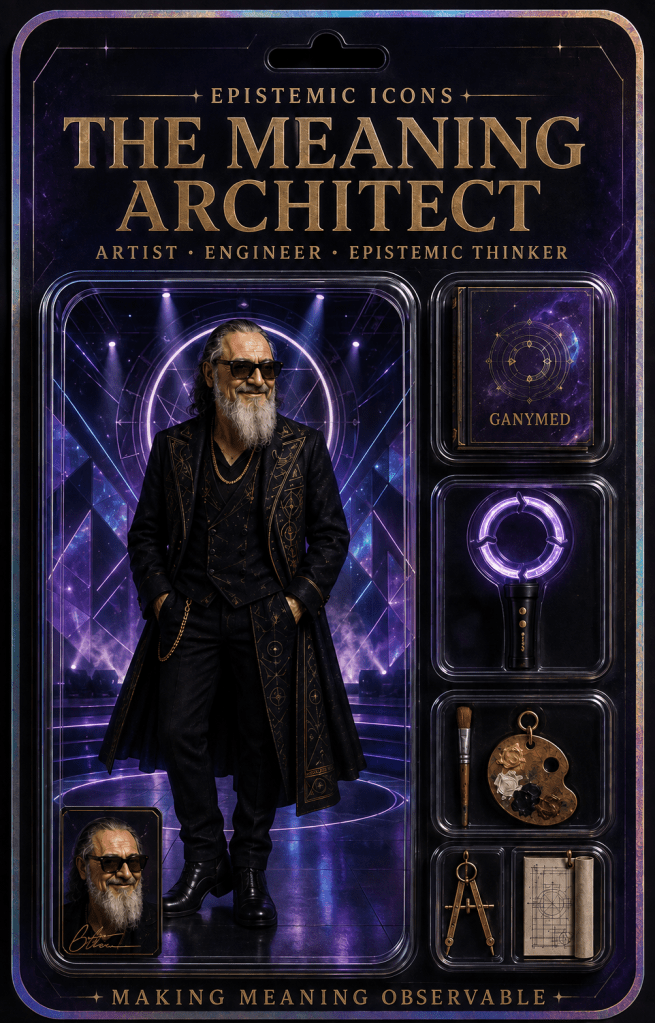
KI inszeniert eine K-Pop-Action-Figur als souveräne Senior Icon. Ganymed wird zum kosmisch gestalteten Konzeptalbum. Der Regelkreis erscheint als eigener Lightstick. Palette, Zirkel und Bauzeichnung bleiben als persönliche „Member Symbols“ erhalten. Eine Photocard ergänzt die typische Collector-Edition. Schwarz-Gold bewahrt Ihre Identität; Violett und Cyan schaffen die K‑Pop-Bühnenwirkung. Besonders gelungen finde ich den Mantel: Seine goldenen geometrischen Linien verbinden Bühnenmode, Kunst und technische Konstruktion.
Dazu kommt ein drittes Paper, bisher nur als Skizze. Es fragt, ob KI epistemisch relevant wird, indem sie für uns die Welt beobachtet – oder ob das der falsche Ansatz ist. Meine These: Es geht nicht um die KI selbst. Es geht darum, ob man Räume so bauen kann, dass Menschen sich dabei beobachten, wie sie der KI zuschreiben, was eigentlich aus ihrer eigenen Auswahl stammt.
Nicht die Maschine beobachtet – die Interaktion tut es, wenn man sie entsprechend konstruiert.
Dieselbe Technologie kann als Schließungsmaschine wirken, die einem die eigenen Selektionen nur bestätigt. Oder als Reflexivitätsmaschine, die zeigt, was man verworfen hat. Der Unterschied liegt nicht im Werkzeug, sondern im Design.
Hier laufen für mich vierzig Jahre Industriearbeit und ein Theaterstück aus der Schulzeit zusammen. Hier die Sagen des klassischen Altertums, Brecht, Dürrenmatt, Beckett und Handke, dort Hochöfen, Logistikstrategien und zu schließende Kreisläufe. Beides waren Denkschulen. Jetzt kehrt derselbe Anspruch auf einer anderen Ebene wieder: nicht Materialströme und Prozesse beherrschbar zu machen, sondern sichtbar zu machen, wie ein Beobachter zu dem wird, was er beobachtet.
Nebenbei mache ich den alten Ganymed-Beitrag hier im Blog besser auffindbar. Zwei Vorgänge, die zusammengehören: das Stück als wissenschaftliches Instrument einzuführen und es gleichzeitig wieder ins Sichtfeld zu holen, wo es lange nicht war.
Was mir dabei auffällt: Wenn man einmal anfängt zu fragen, unter welchen Bedingungen Sinn beobachtbar wird, hört man nicht mehr auf, diese Frage überall zu stellen – an ein altes Theaterstück genauso wie an ein Gespräch mit einer KI.
Die KI-Hüttenwerk-Variante (sozialistischer Realimus) ist entsprechend angepasst: EPISTEMIC ICONS, THE MEANING ARCHITECT, THE MEANING ARCHITECT, MAKING MEANING OBSERVABLE. Vor dem Hüttenwerk gewinnt die Schlussformel zusätzliche Bedeutung: Beobachtbar werden nicht nur Sinnoperationen, sondern auch das Verhältnis von technischer Konstruktion, industrieller Ordnung und künstlerischer Deutung.
Ganymed gibt keine Antworten. Das ist seine epistemische Leistung.
Sinn entsteht – aber wird nicht geschlossen.
Darin liegt die operative Öffnung durch Ganymed.
Ein gewöhnlicher Widerspruch bleibt innerhalb eines bestehenden Sinnraums. Man kann eine Aussage ablehnen, eine andere Position vertreten oder eine alternative Erklärung anbieten und trotzdem dieselben grundlegenden Unterscheidungen verwenden. Der Widerspruch verändert dann den Inhalt, nicht aber den Raum, in dem dieser Inhalt Sinn erhält.
Ganymed geht weiter. Das Stück destabilisiert die Unterscheidungen selbst.
Der Leser versucht zwangsläufig, Ordnung herzustellen. Er identifiziert Figuren, verbindet Aussagen, rekonstruiert Motive und sucht nach Kohärenz. Doch die gefundene Ordnung hält nicht. Damit wird etwas sichtbar, das bei stabiler Kommunikation gewöhnlich unsichtbar bleibt:
Die Kohärenz lag nicht einfach im Gegenstand. Der Beobachter hat an ihrer Herstellung mitgewirkt.
Operative Öffnung bezeichnet den Moment, in dem eine bislang selbstverständliche Ordnung ihre Notwendigkeit verliert und wieder als eine mögliche Ordnung unter anderen erscheint.
Das ist Rekontingenzierung.
Sinnräume werden jedoch nicht nur durch einzelne Unterscheidungen stabilisiert. In gesellschaftlicher Kommunikation übernehmen Narrative eine besondere Funktion. Sie verdichten Argumentationszusammenhänge auf ein anschlussfähiges Mindestmaß und tragen damit dazu bei, bestimmte Unterscheidungen fortlaufend zu reproduzieren. Ein dominantes Narrativ kann so einen Sinnraum stabilisieren, ohne Widerspruch ausschließen zu müssen. Solange der Widerspruch an dieselben grundlegenden Unterscheidungen anschließt, bleibt er Teil dieses Sinnraums.
Darin unterscheidet sich Ganymed auch von einem Gegennarrativ. Ein Gegennarrativ kann die bestehende Ordnung bestreiten und trotzdem deren zentrale Unterscheidungen reproduzieren. Es besetzt dann lediglich die andere Seite derselben Unterscheidung.
Ganymed verfährt anders. Es setzt dem bestehenden Sinnraum nicht einfach einen anderen entgegen. Es destabilisiert die Unterscheidungen, durch die sich ein Sinnraum überhaupt stabilisieren kann.
Ganymed hält den Beobachter für einen Moment zwischen den Ordnungen: Die bisherige Sinnproduktion funktioniert nicht mehr selbstverständlich, eine neue ist aber noch nicht stabilisiert.
Dieser Zwischenraum ist epistemisch produktiv.
Denn erst dort kann sichtbar werden, dass ein Sinnraum überhaupt ein Sinnraum ist – eine durch bestimmte Unterscheidungen erzeugte Ordnung von Anschlussmöglichkeiten und nicht die einzig mögliche Form, in der etwas beobachtet werden kann.
Ganymed sagt dem Beobachter nicht, was er stattdessen denken soll.
Ganymed unterbricht für einen Moment die Selbstverständlichkeit dessen, womit er denkt.
Operative Öffnung bedeutet dann: Nicht einen Sinn durch einen anderen ersetzen, sondern die Bedingungen der Sinnproduktion selbst wieder als veränderbar sichtbar machen.
Darin liegt auch die erstaunliche Ergiebigkeit des Stücks. Ganymed enthält eine ungewöhnlich ergiebige Operationsstruktur.
Das ist erheblich.
Der Text zwingt immer wieder dazu, dieselben grundlegenden Probleme neu zu beobachten: Wie entsteht Sinn? Warum stabilisieren wir ihn? Was geschieht bei Widerspruch? Wie wird Widerspruch wieder anschlussfähig? Woher nimmt ein Beobachter seine Unterscheidungen? Und kann er die Ordnung, mit der er beobachtet, überhaupt verlassen?
Gerade weil Ganymed diese Fragen nicht beantwortet, sondern seine eigenen Stabilisierungen immer wieder beschädigt, lässt sich mit ihm weiterarbeiten.
Überraschend ist dabei, wie konsequent sich ein theoretisches Problem aus dem vorherigen ergibt:
Sinnproduktion führte zur Frage nach Beobachtbarkeit. Beobachtbarkeit führte zum Beobachter. Der Beobachter führte zur Reflexivität. Reflexivität führte zur Frage nach dem Sinnraum. Der Sinnraum führte zum Narrativ als Stabilisierungsmechanismus. Narrative Dominanz führte zu Widerspruch und Translation. Und daraus entstand schließlich die Frage nach dem epistemischen Exit.
Das ist vielleicht selbst das beste Beispiel für operative Öffnung: Ganymed liefert keine Theorie, die nur noch entfaltet werden müsste. Das Stück bringt den Beobachter dazu, seine eigene Theorie weiterzuentwickeln, weil die jeweils erreichte Ordnung nicht ausreicht, um das Beobachtete zu stabilisieren.